Nº 11 · Site
Bird Park site
Wrigley era
| Founded or built | 1929 (opening; some histories date the park to approximately 1926) |
|---|---|
| Built by | D. M. Renton built it as part of William Wrigley Jr.'s program. |
| First use | A free public aviary and bird park. |
| Later | The remaining birds were transferred to the Los Angeles Zoo in 1966; the site was repurposed as a preschool in 1970. |
| Today | The site is home to an Avalon preschool; the original aviary building still stands. |
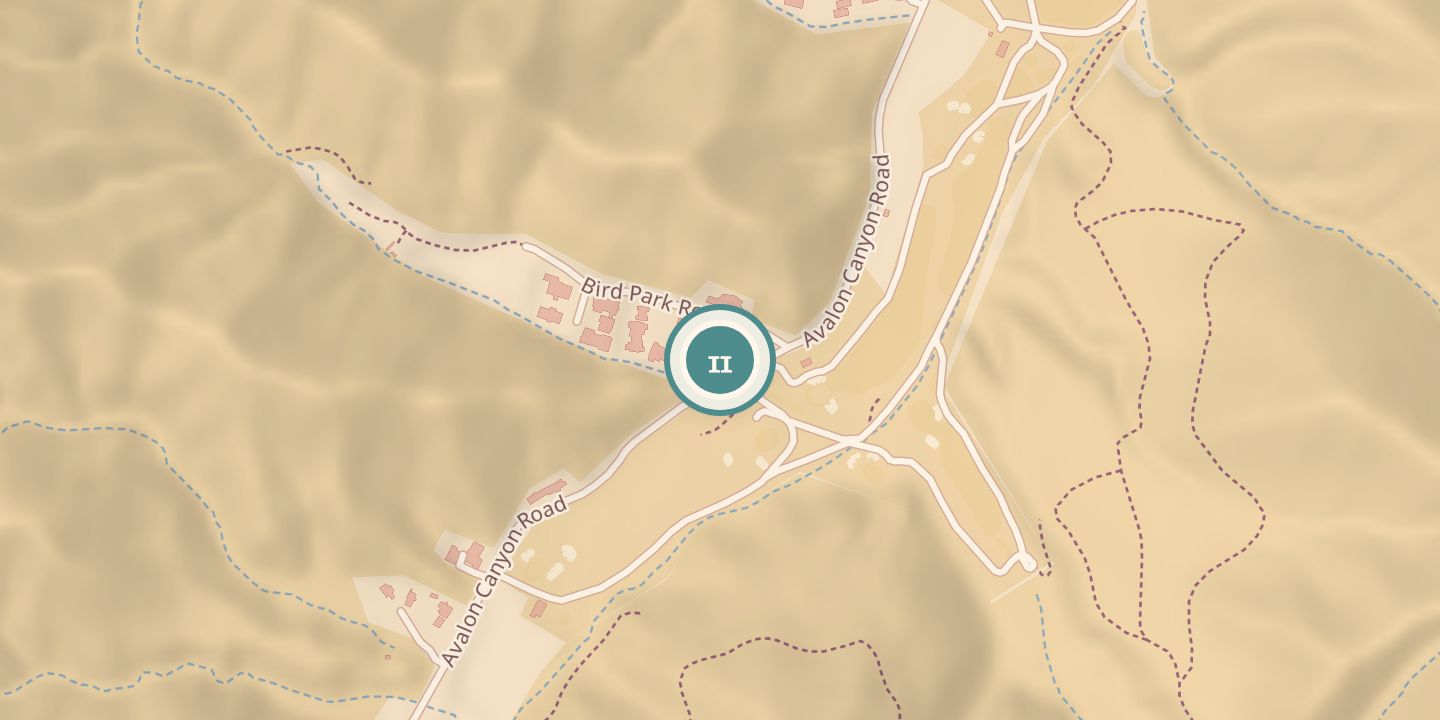
| Address | Avalon Canyon Road, at the intersection of Avalon Canyon and Bird Park Road. |
| Location | 33.3349° N · 118.3328° W |
History
William Wrigley Jr. and his wife, Ada, planned a bird sanctuary in Avalon Canyon. Workmen moved the metal framework of the former Sugarloaf Casino dance pavilion to the site in late 1927, and it was adapted as the park’s main aviary. D. M. Renton built the park as part of Wrigley’s program.
The park opened in 1929 and covered about seven and a half acres. It offered free admission and grew to house more than 8,000 birds in over 500 cages. In 1939, a sound team for The Wizard of Oz recorded bird sounds there for use in the film.
Island access restrictions during World War II reduced visitation, and the park operated on a smaller scale after the war. It closed in 1966, and its remaining birds were transferred to the newly established Los Angeles Zoo. The former park’s aviary building still stands and was repurposed as a preschool in 1970.
Chronology
- 1927Workmen began moving the former Sugarloaf Casino framework to the Bird Park site.
- 1928The casino framework was reused to construct the aviary.
- 1929The Bird Park opened to visitors.
- 1939A sound team for The Wizard of Oz recorded bird sounds at the park.
- 1941Catalina Island closed to non-military visitors after the attack on Pearl Harbor.
- 1966The park closed; its remaining birds went to the Los Angeles Zoo.
- 1970The former park building was repurposed as a preschool.
Notes
- Avalon Canyon Road.
Sources
Every source for this place is numbered on the Sources page, with original records listed first.