Nº 212 · Vanished building
Sugarloaf Rock
1929
| Founded or built | Not applicable; a natural rock formation. |
|---|---|
| Built by | None; natural rock formation. |
| Architect | None. |
| First use | A landmark for ships marking the northern end of Avalon Harbor. |
| Later | Tourists climbed Little Sugarloaf, and it was used as a setting for Fourth of July fireworks. Big Sugarloaf was removed for the earlier casino; Little Sugarloaf was dynamited in March 1929. |
| Today | The rock is no longer extant. The Catalina Casino stands at the site area. |
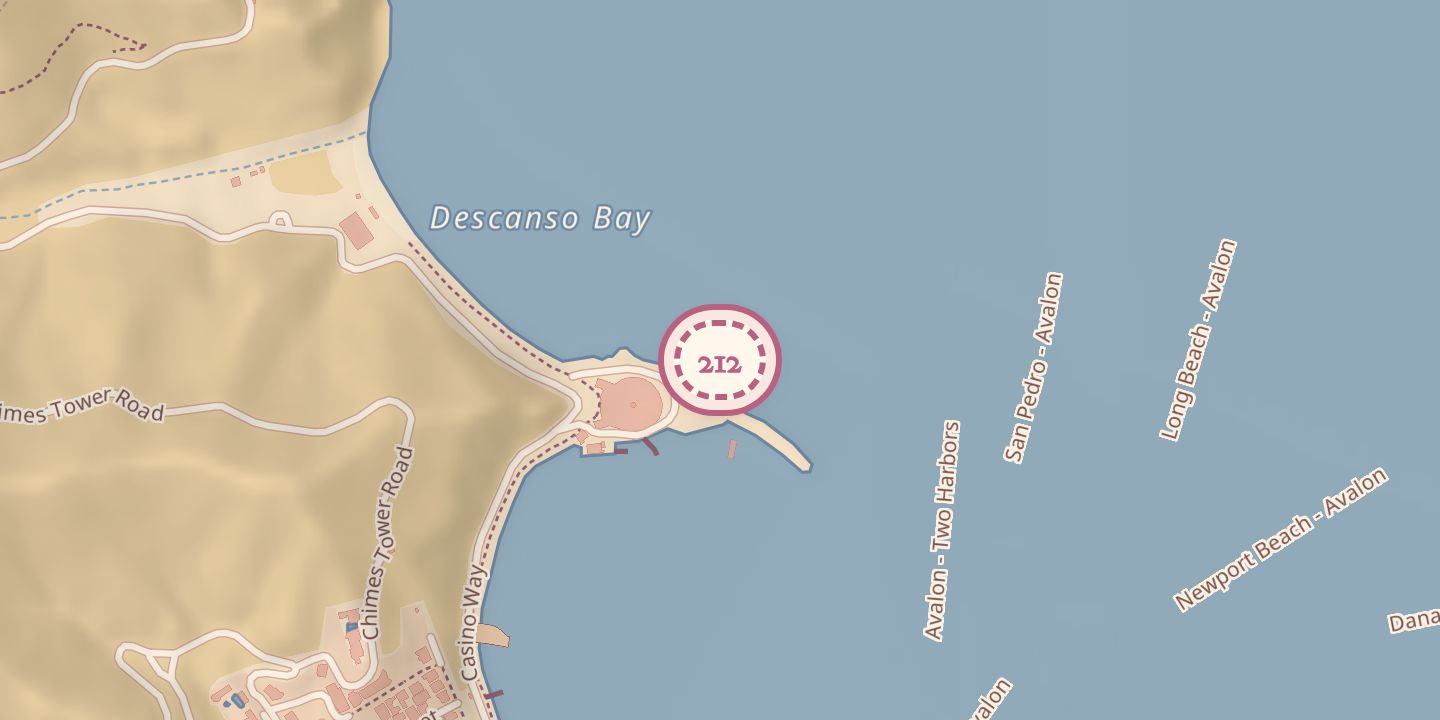
| Address | Sugar Loaf Point at the entrance to Avalon Harbor, where the Catalina Casino stands today. |
| Location | 33.3493° N · 118.3248° W (approximate) |
History
Sugarloaf Point marked the northern end of Avalon Harbor for sailing ships. Tourists climbed Little Sugarloaf using wooden ladder planks built in 1896, and the rock was also used as a backdrop for Avalon’s Fourth of July fireworks.
William Wrigley Jr. had Big Sugarloaf removed to make room for the earlier Sugarloaf Casino, a dance pavilion that opened beside the landmark in 1920. Little Sugarloaf remained until March 1929, when it was dynamited to give the new Catalina Casino greater visibility and visitors unobstructed ocean views.
Chronology
- 1896Wooden ladder planks were built on Little Sugarloaf so tourists could climb it.
- 1920The Sugarloaf Casino, a dance pavilion, opened beside the rock.
- Before March 1929Big Sugarloaf was dynamited to make room for the earlier casino.
- March 1929Little Sugarloaf was dynamited to improve views of the new Catalina Casino.
Notes
- One account describes Sugar Loaf Rock as a single monolith about 50 feet high; another distinguishes Big and Little Sugarloaf and says Big was removed earlier, while Little was blasted in March 1929.
Sources
Every source for this place is numbered on the Sources page, with original records listed first.